This release brings exciting news for DiagAI! Two of its core engines have been updated, delivering meaningful improvements to both phenotype-driven prioritization and pathogenicity scoring.
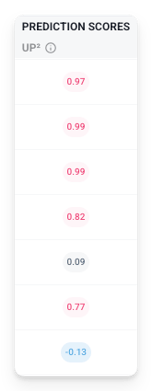 UP2 — Retrained Model for Short Variants
Our Universal Pathogenicity Predictor (UP2) has been retrained on an expanded dataset of over 3 million variants, with a particular focus on non-coding variant prediction. New predictors such as GPN-MSA and improved data augmentation techniques have been incorporated, increasing sensitivity on pathogenic non-coding variants.
This update also includes a more refined integration of ClinVar submissions, prioritizing the most credible entries for each variant to ensure greater consistency with what is displayed on the platform.
The score range (-1 to 1) and the global behaviour of the score remain unchanged.
Phenogenius Upgrade (3.1)
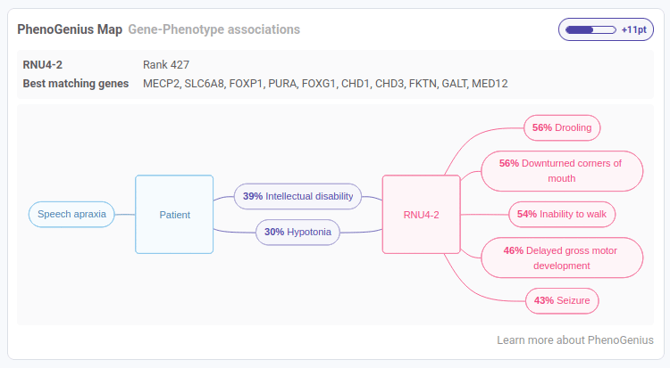
Phenogenius is our gene-phenotype ranking tool that uses HPO terms to help prioritize variants most likely to explain a patient's clinical presentation.
We have updated it to version 3.1 alongside a new January 2026 HPO resource from JAX, expanding coverage to 6,181 genes and 19,409 HPO terms — approximately 200 new genes and 500 new terms compared to the previous version.
This update integrates genes newly linked to phenotypes in the literature or public databases since our last version, including recent gene-phenotype associations such as those from LitVar publications.
📚 Go Deeper — DiagAI White Paper
Read the updated DiagAI Germline White Paper, which includes a full performance validation study on Whole Genome Sequencing data from the National Genomic Research Library, Genomics England.